Training beta
PocketCoach is available to try.
The working beta gives guides and learners a shared place to set work, log daily growth, and keep feedback visible between sessions.
Business context
As a coach, I kept running into the same problem across teams and levels: feedback loops between coach and athlete were inconsistent and hard to track. Progress updates lived in text threads, spreadsheets, and video comments. Athletes lost a clear view of their own development, and coaches had no simple way to show growth over time or keep motivation high through a full training cycle.
The tools on the market focused on capturing data (reps, times, metrics), but not on the learning and communication side of performance. There was no simple way to connect: what did I tell you to work on, did you do it, did it get better, and how do you feel about where you are now.
Product decision & approach
I started building an AI-based platform to centralize skill tracking, feedback, and motivation signals, designed specifically around the coach–athlete relationship. The goal was not just dashboards, but a living loop: guidance, work, check-in, adjustment.
- Problem validation: interviewed coaches and athletes to map how feedback was given, how it was received, and where it was getting lost. This surfaced the core patterns we needed to solve first.
- MVP definition: scoped and prioritized an initial feature set around measurable improvement loops: what skill is being developed, what feedback was given, and what changed.
- AI feedback engine: partnered with AI developers to prototype early feedback and reflection models. The goal: help coaches deliver consistent, high-quality guidance without adding more work.
- Roadmap + testing: managed the product roadmap, feature prioritization, and iterative testing with early user cohorts to see what actually stuck in day-to-day coaching.
- Brand + UX: designed a simple, trust-centered brand and product experience focused on clarity, accountability, and motivation, not surveillance.
Working product
Two connected views of the same coaching loop
These live product screens show the system designed around both sides of the relationship: the learner records progress and receives guidance, while the guide can assign work, communicate with the team, and review activity.
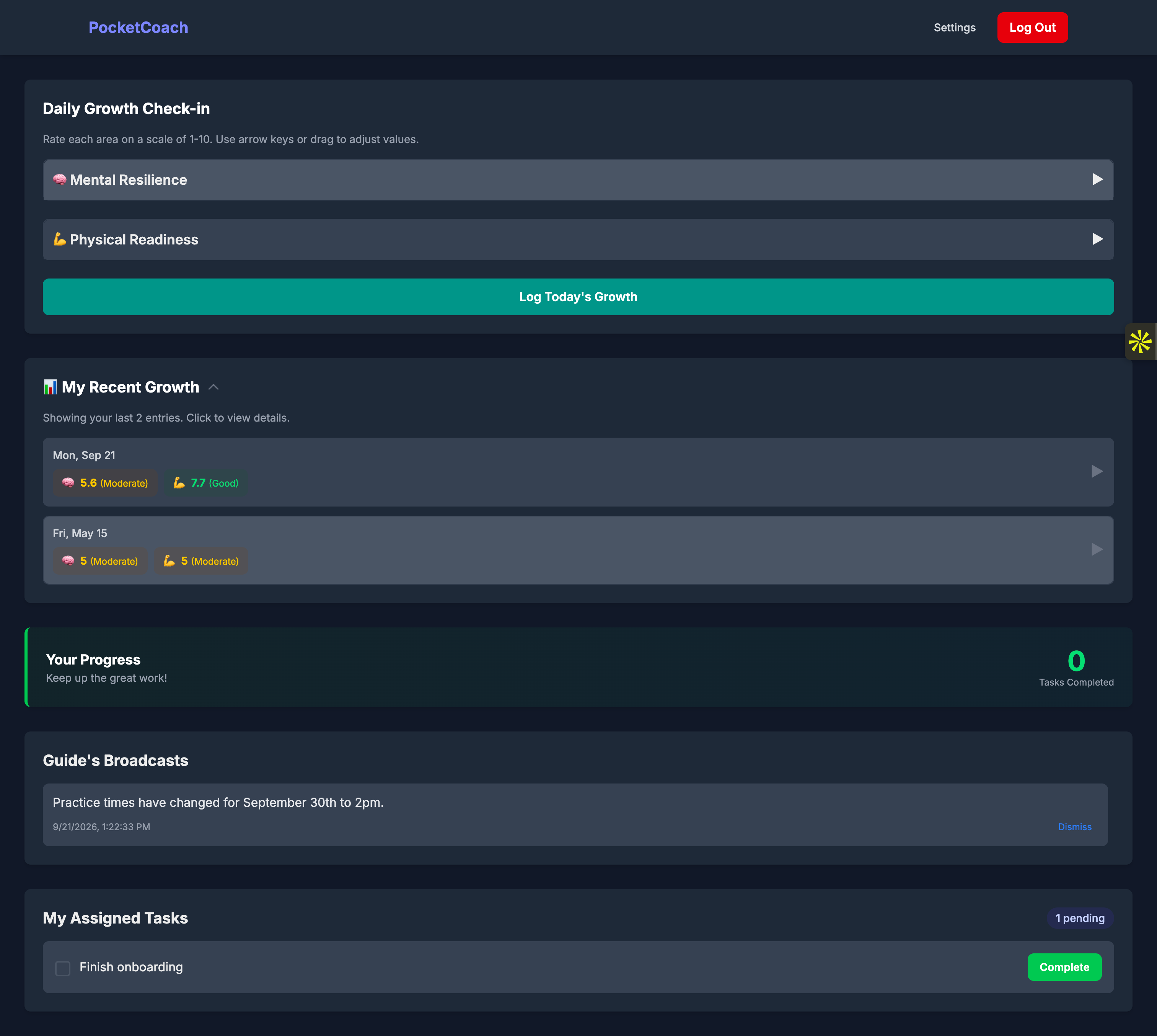 Open learner view
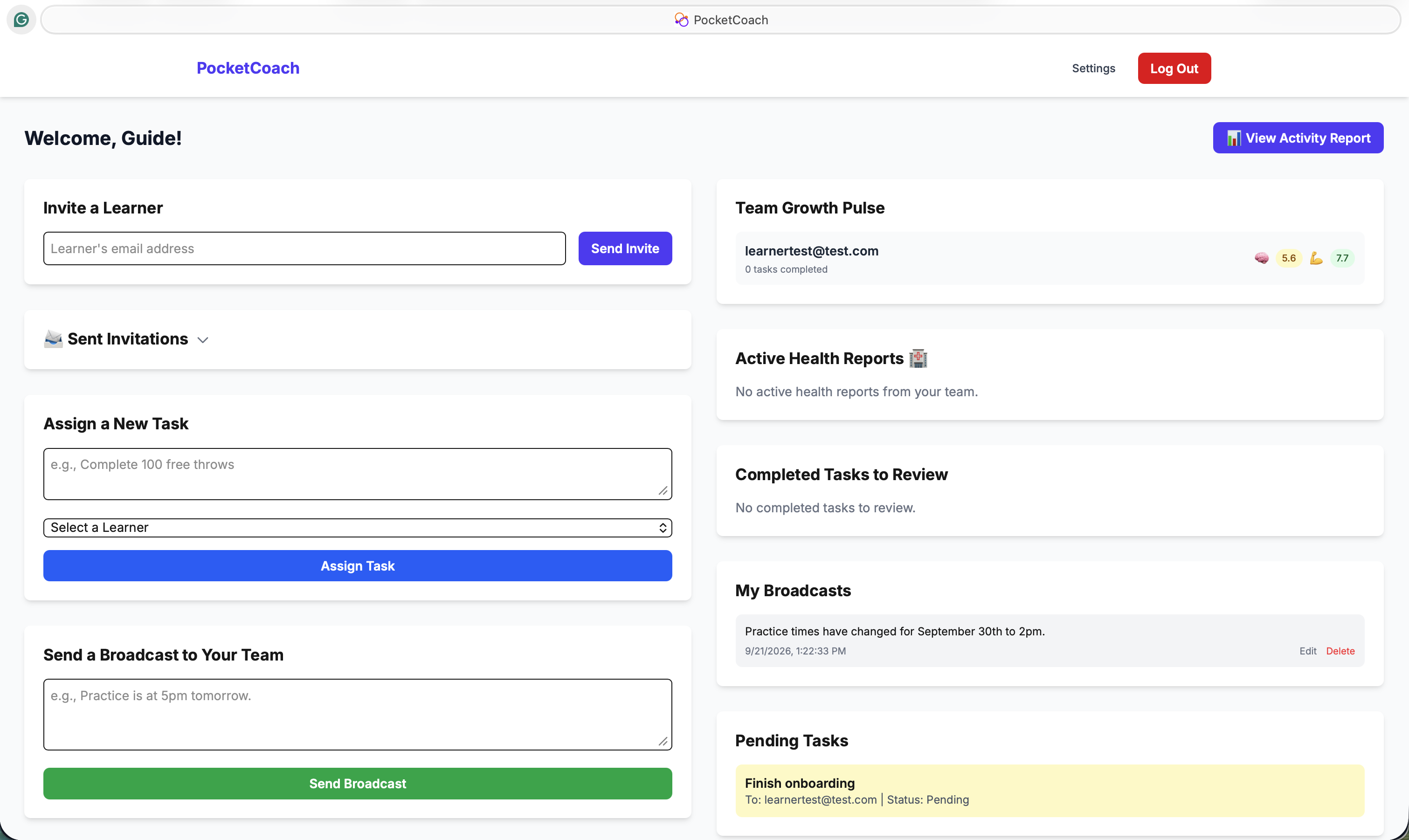 Open guide view
Outcome & evidence
- Beta in market: launched an initial working version and put it in the hands of early adopter coaches and athletes.
- Active iteration: collecting direct usage feedback and evolving core features, UI flows, and AI responses based on real training scenarios.
- Signal of fit: early conversations and testing suggest the platform is closing a real gap in communication and motivation, not just data capture.
- Path to impact: a clear roadmap is in place to measure progression, engagement, and retention over upcoming cycles, moving from “promising” to “proven.”
Key Learnings
- Start with the pain you know: products built from lived frustration have instant clarity on what matters and what’s noise.
- Coaches want leverage, not dashboards: the value is in faster, clearer feedback loops, not more charts.
- Trust is part of the product: athletes respond when the system feels like support, not surveillance. Brand voice and UX are part of adoption, not an afterthought.