Business context
Executives needed to converge on the shape of “Project Metro”: whether to build ML-driven analytics that automate and secure Hybrid IT, or create an integration portal that unifies existing tools without duplicating current products. The team also had to align on scope (edge to core), target users, and how to compete with hyperscalers while remaining hardware-agnostic.
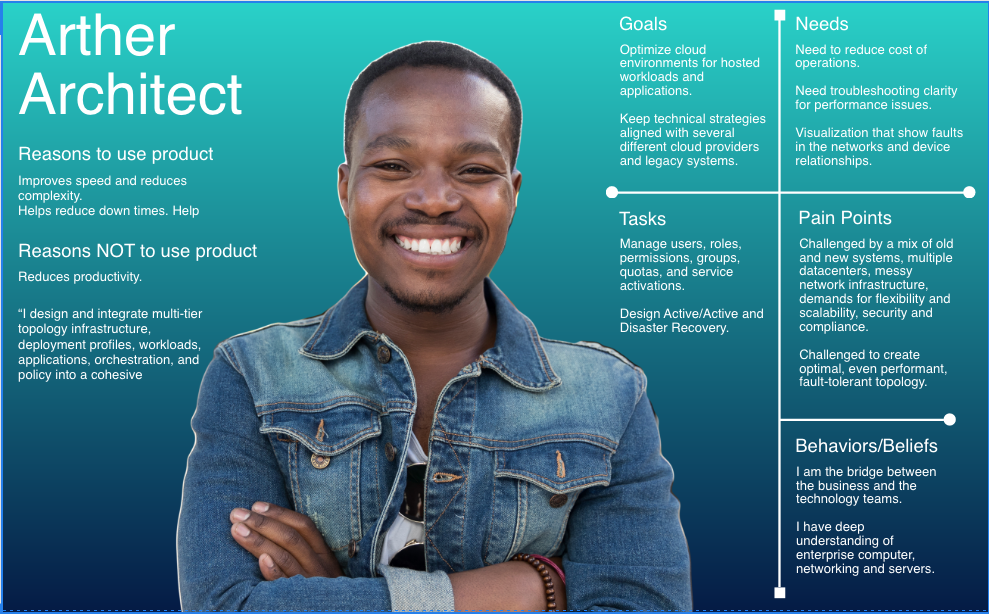
Designing for the enterprise architect
Research synthesized the goals, responsibilities, constraints, and decision criteria of enterprise architects navigating complex cloud and hybrid-infrastructure environments. This persona helped keep the team grounded in the people responsible for balancing technical performance, operational cost, flexibility, security, and business needs.
Product decision & approach
We synthesized stakeholder input into clear product framing and a path to decision:
- Stakeholder research: 14 interviews coded into themes using qualitative analysis tools.
- Clarified two viable paths: (1) ML-driven analytics for automation/security; (2) integration portal extending SaaS management.
- Universal guardrails: generate revenue, remain hardware-agnostic.
- Opportunity mapping: analytics-led recommendations, proactive remediation, BMaaS, edge deployments, policy-based management.
- Success criteria + next steps: share findings, fund research, run design sprint, shape roadmap.
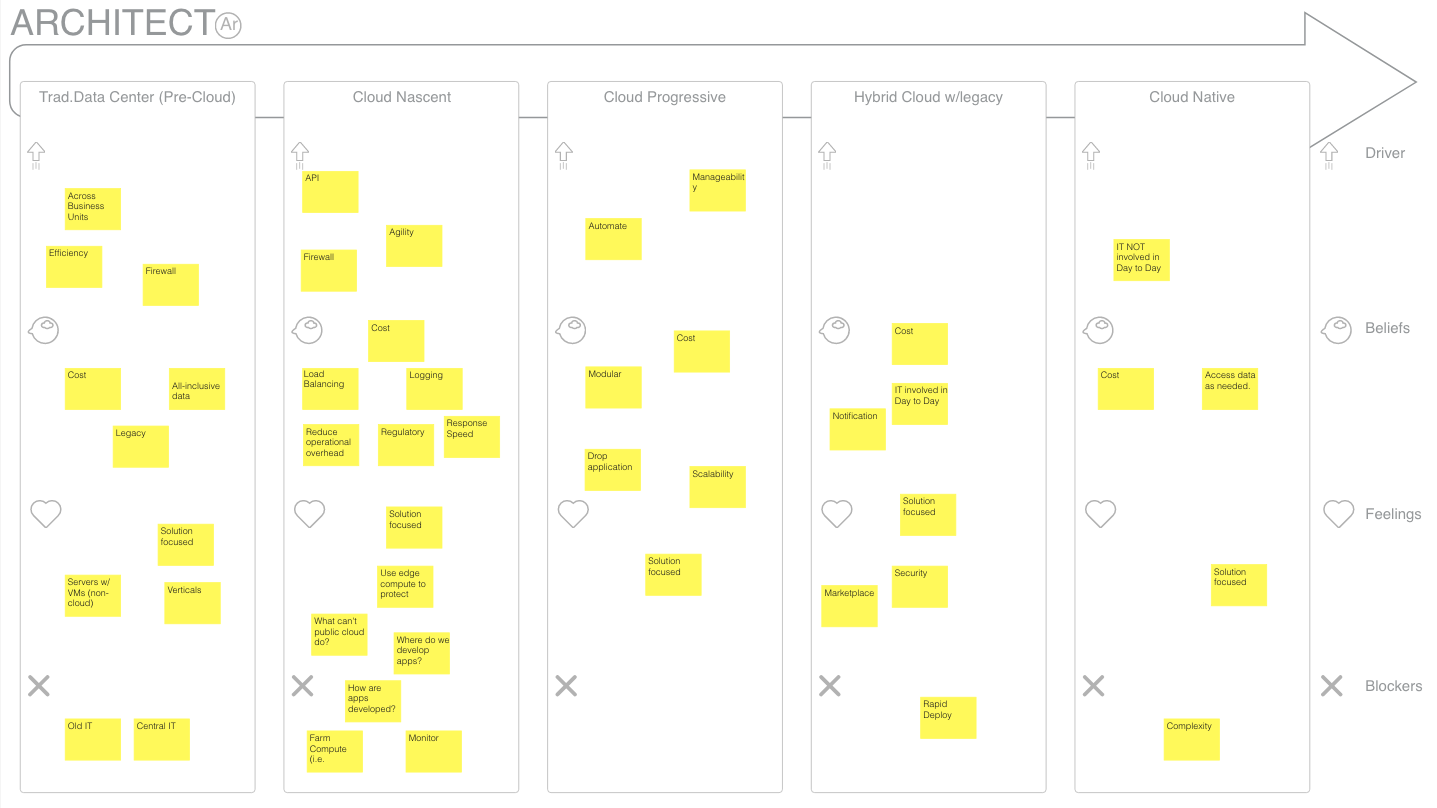
Mapping the evolution toward cloud-native operations
To help stakeholders move beyond isolated feature discussions, I facilitated a visual exploration of how architect needs, beliefs, blockers, and decision drivers change from traditional data-center environments through hybrid and cloud-native models. The exercise created a shared view of the transition and helped frame the opportunities the experience needed to address.
 Open full-size artifact
Outcome & evidence
- Clear thesis for a SaaS-delivered, ML-assisted product that complements the portfolio without duplication.
- Alignment on hardware-agnostic positioning and integration with existing tools.
- Prioritized exploration areas: proactive remediation, edge scenarios, BMaaS, and policy engines.
- Agreed path forward: fund customer research and run a design sprint to define the roadmap.
Key Learnings
- Evidence accelerates alignment: structured stakeholder data reduced debate and guided decision-making.
- Sequence matters: build reliable data streams first, layer ML intelligence after.
- SaaS + expertise wins: combining SaaS delivery with expert operations outperforms DIY for large hybrid estates.