Business context
Field teams in California warned that publishing online prices would undercut relationship-driven sales, spark bidding wars, and risk wrong prices during peak season. Consultants relied on bundled deals and in-person touchpoints; exposing list prices alone would misrepresent value and disrupt branch workflows.
Product decision & approach
We conducted three research trips across four California locations, then brought findings to a sprint demo to build empathy and align on direction. We reframed commerce to prioritize quotes, compliance, and branch workflows over static list prices:
- Quote-first design: prioritize negotiated, bundled deals instead of list prices.
- Compliance gates: early, mandatory RUP verification with branch callouts.
- Branch-friendly ops: multi-recipient notifications, no prices on delivery tickets by default, prevent double orders.
- Inventory visibility: prioritize stock tracking with GPS/time-stamped order flows.
- Payments roadmap: cards/PayPal where viable; financing as a margin lever.
- Governance: codified regional flexibility while presenting findings to digital leadership.
How I worked
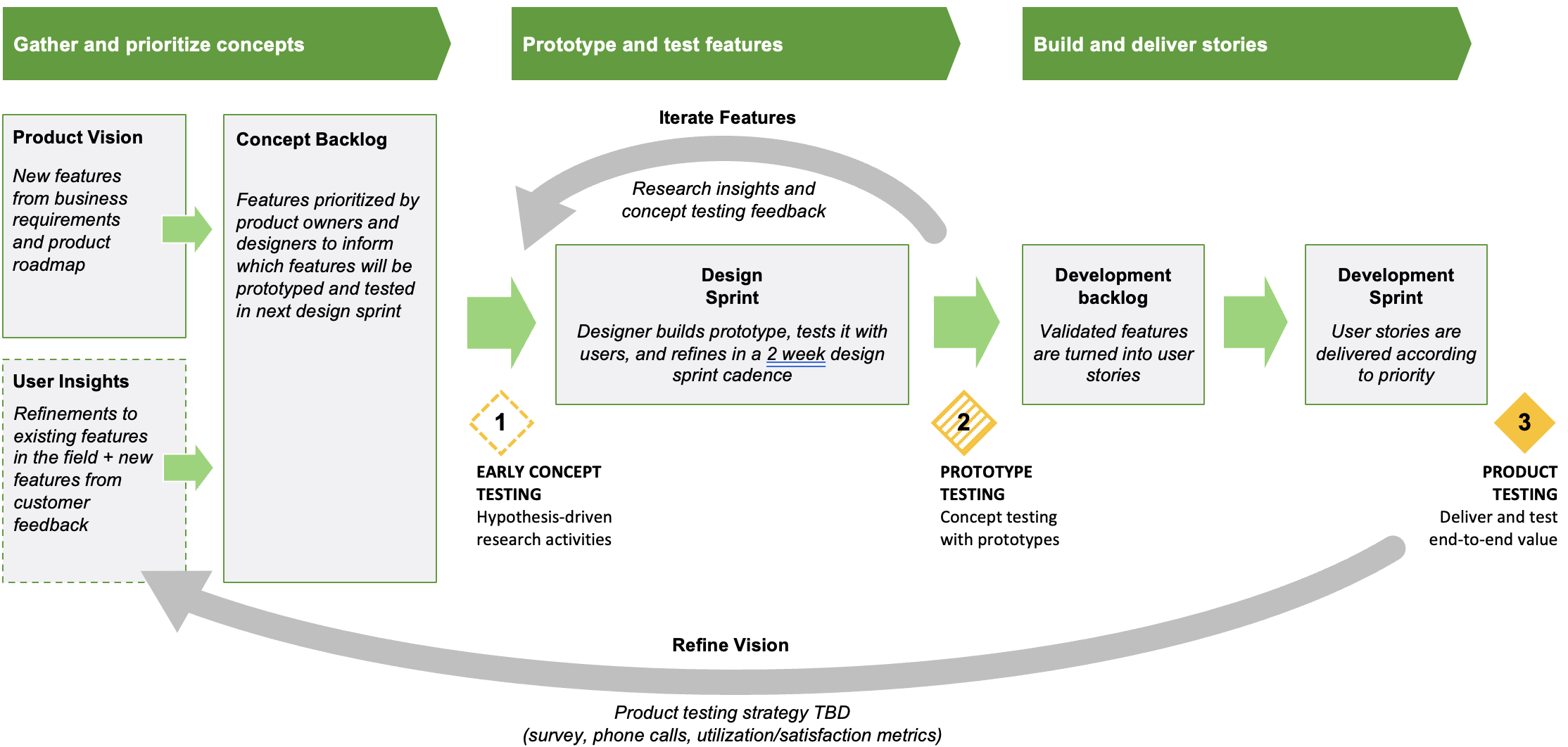
I worked within a team testing approach that connected customer insights, concept prioritization, prototype validation, and development. Research and feedback helped inform which features the team explored, tested with users, refined, and moved into delivery.
 Click to enlarge
Turning usability observations into design direction
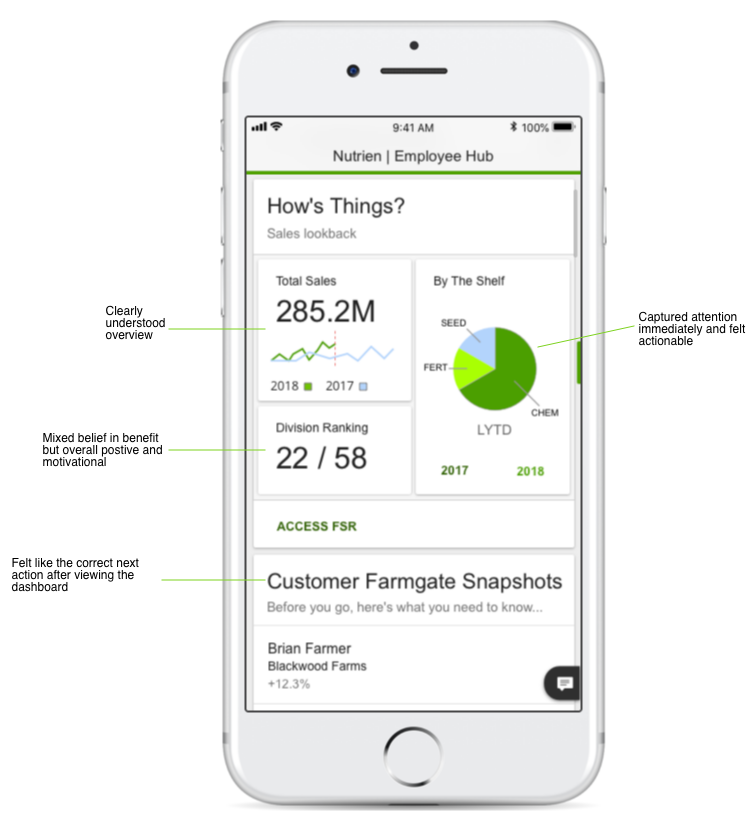
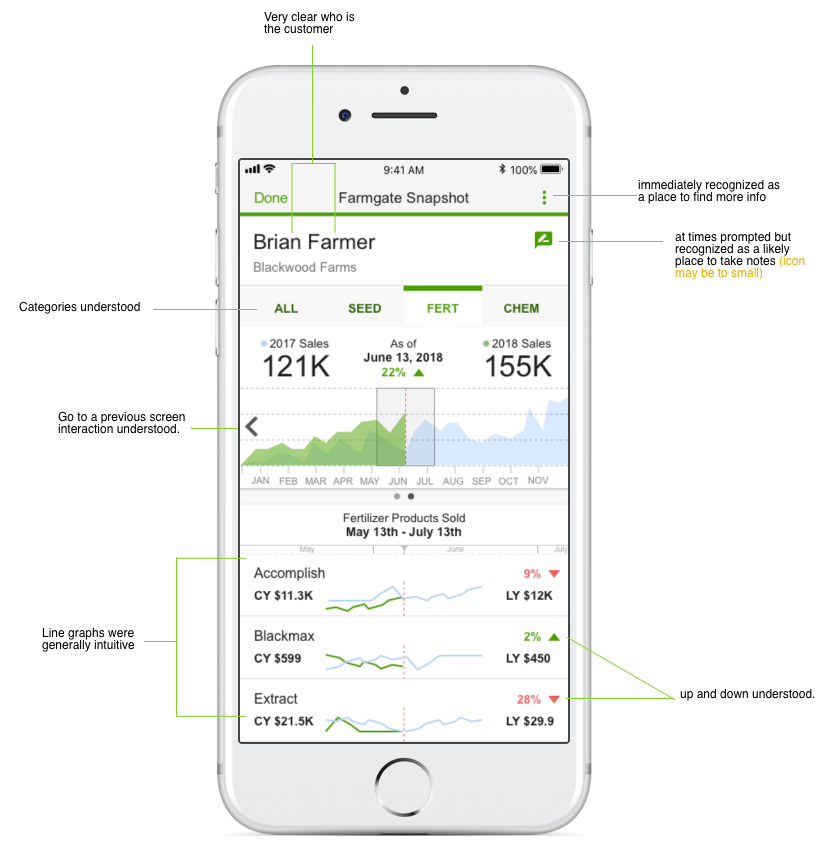
Usability testing generated more than general impressions. I mapped participant reactions directly to the interface to identify what users understood immediately, what captured attention, where confidence dropped, and whether the next action felt clear. This made the findings easier for stakeholders and designers to connect to specific design decisions.
Dashboard overview: clarity, motivation, and next actions
 Click to enlarge
Customer detail view: navigation, comprehension, and data interpretation
 Click to enlarge
Screen-level usability synthesis: I translated participant feedback into concrete observations across both the dashboard overview and the detailed customer view, distinguishing what was clear, what encouraged action, and where the interface created uncertainty.
Outcome & evidence
- Leadership aligned on “don’t publish list prices; start with quotes.”
- Clear priorities: inventory management, order tracking, compliance gates.
- Defined pricing governance with branch flexibility and safeguards for margin.
- Adopted design principle: regional variance requires configurable workflows.
Key Learnings
- Quotes & bundles = value: in relationship-driven markets, list prices fail to convey real customer value.
- Compliance + ops matter: regulatory checks and operational alignment must be core product features, not afterthoughts.
- Design for variance: regional flexibility beats rigid uniformity; guardrails empower branches without chaos.